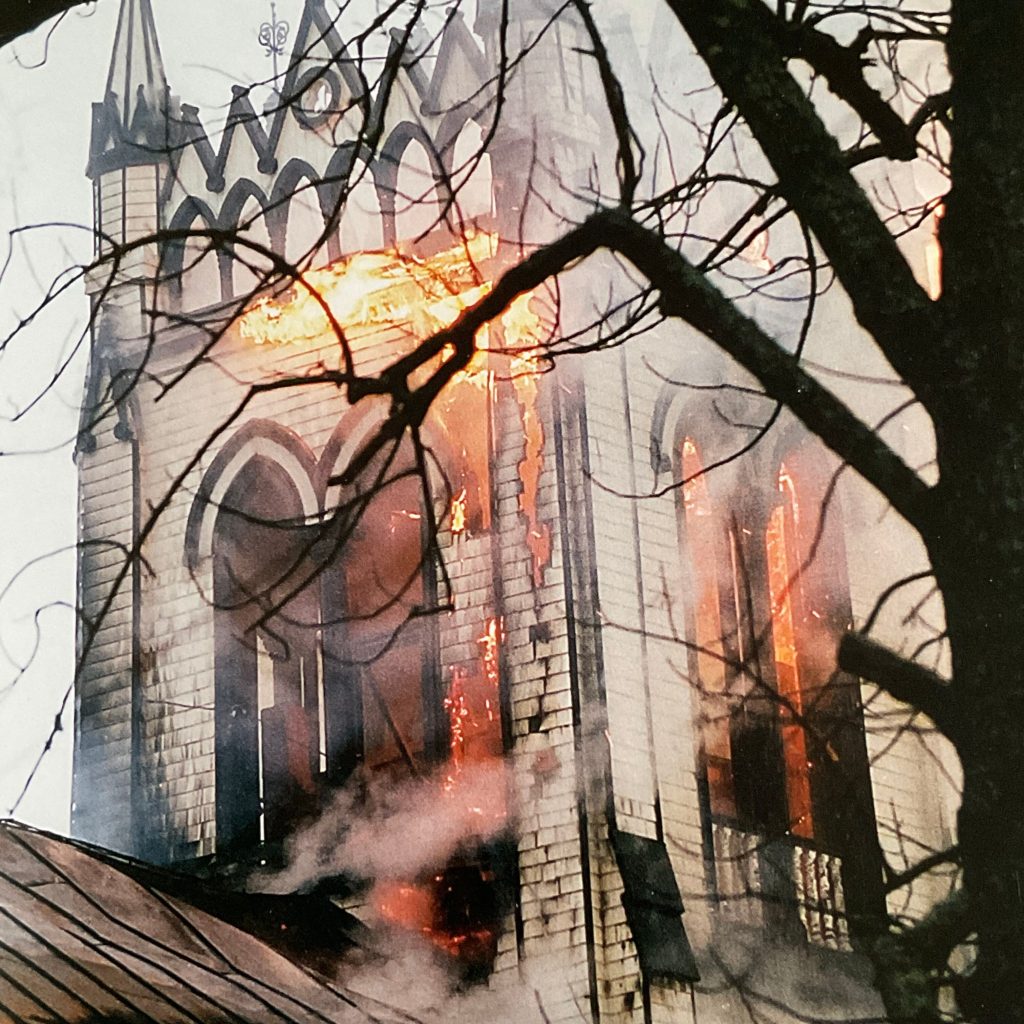
On Halloween night, 2001 a fire broke out in St. John’s. The fire department responded quickly and it appeared that they had extinguished the blaze. However, the flames went into the hollow buttress and rose to the roof and spread under the copper sheathing of the nave. When this was discovered, it was impossible to dose the fire which had worked its way under the eaves and into the roof.
Firefighters from the 13 surrounding communities responded to the call for reinforcements but the building was doomed. By first light flames were seen at the tower. The tower became a torch and the giant tenor bell crashed to the ground.
That evening, the most Reverend, Fred Hiltz, Bishop of the Diocese of NSPEI at the time and former Rector of St. John’s, later primate of Canada, led a special service in the Parish Hall. A few hours earlier five firemen had rescued the Altar from the smouldering church and carried it across the parade ground to the hall. More than 200 members of the congregation, as well as town people, attended the poignant service.
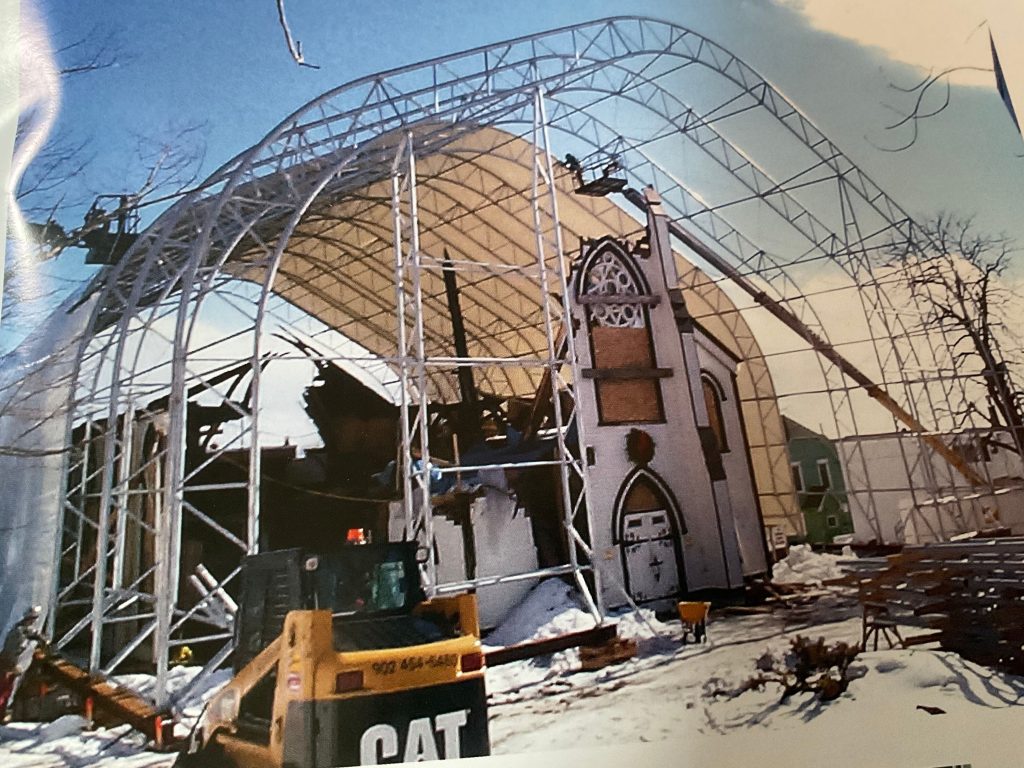
Parish council held a special meeting and a restoration committee was established. Given the option to build or restore, the congregation decided to restore the church to its former state. This choice presented the greatest challenge, not only because of the resources required, but also to retain its national historic site status, it required that it be restored to 1892 standards.
As well, restoring an over a 2oo year wooden church was a formidable challenge. Where could they find the talented workers with the ability to replicate the architecture of the original structure? Where could they obtain enough information about the original building and design details?
Fortunately, local craftsman, and volunteers could do it. Once started, skills and talented teams seemed to come out of the woodwork. The carpentry, wood carving, stain-glass work, artwork, painting, furnishing conservation, and so much more was done by local workers. This was accomplished with the help of AI computer generated proportional drawings provided by Parks Canada with numerous pictures and site measurements. This information was crucial to the success of the restoration of St. John’s.